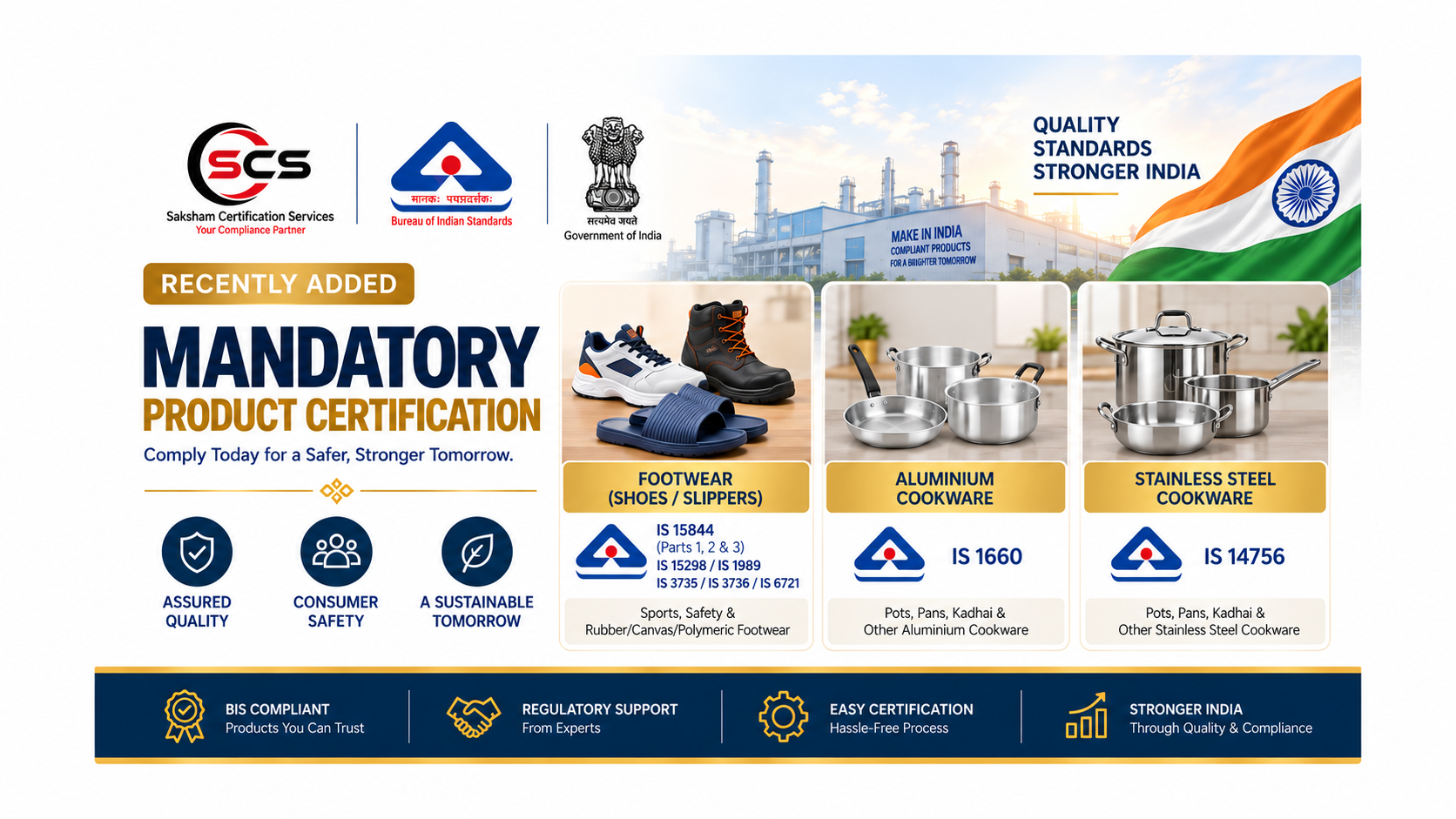
Upcoming BIS QCOs: Mandatory Certification Requirements for Manufacturers
Manufacturers across multiple industries need to prepare for upcoming Quality Control Orders (QCOs) that will bring additional products under mandatory BIS conformity requirements.
The Bureau of Indian Standards (BIS), in coordination with the concerned Ministries and Departments of the Government of India, is progressively bringing additional products under mandatory conformity requirements through Quality Control Orders (QCOs).
For manufacturers, an upcoming QCO should not be treated simply as a future deadline. It is a signal to begin compliance planning well in advance. Testing, technical documentation, product identification, factory preparation and BIS application formalities can all require significant time.
BIS maintains advance information regarding Quality Control Orders that have been notified and are due for implementation. These upcoming requirements cover products across industries such as chemicals, hand tools, aluminium products, electrical appliances, cookware, packaging materials, consumer electronics, ropes and cordages.
Important for Manufacturers
A QCO implementation date should be treated as a compliance planning deadline — not the date on which certification preparation should begin. Manufacturers should start evaluating applicability, testing, documentation and factory readiness as early as possible.
What Is a BIS Quality Control Order (QCO)?
A Quality Control Order (QCO) is a regulatory order through which the Government of India makes compliance with specified Indian Standards mandatory for identified products.
Once an applicable QCO comes into force, manufacturers of covered products may be required to obtain the applicable BIS licence or registration and comply with the specified Indian Standard before manufacturing, importing or commercially supplying the covered product in India, subject to the specific provisions, exemptions and transitional arrangements of the QCO.
What Products Are Coming Under Mandatory BIS Certification?
The upcoming BIS QCO implementation programme includes notified products and product groups across several sectors. Key categories include:
1. Hand Tools
Products such as pipe wrenches, spanners, adjustable wrenches, slugging wrenches and combination side-cutting pliers may be covered under applicable Indian Standards and QCOs.
2. Electrical Appliances
A wide range of household, commercial and similar electrical appliances are being brought under mandatory conformity requirements through applicable regulatory orders.
3. Aluminium Products
Aluminium and aluminium alloy products including bars, rods, sections, plates, sheets, wires and products intended for electrical applications may be covered.
4. Cookware & Utensils
Specified cookware, utensils and cans may be covered under applicable QCOs and Indian Standards.
5. Packaging Products
Woven sacks and other specified packaging products covered by notified textile-related QCOs may require mandatory compliance.
6. Consumer Electronics
Specified consumer electronics, including applicable digital television receiver products, may be subject to the relevant BIS registration or conformity framework.
7. Chemical Products
Certain chemical products may be covered by QCOs with implementation, suspension or transitional provisions specified in the applicable orders.
8. Ropes & Cordages
Specified ropes and cordages covered by applicable Indian Standards and QCO provisions may also require mandatory conformity compliance.
Note: The exact applicability of a QCO depends on the product description, technical characteristics, material, application, applicable Indian Standard, scope, exclusions, exemptions and subsequent amendments. Manufacturers should evaluate their specific products rather than relying only on a broad product category.
What Should Manufacturers Do Now?
Manufacturers whose products may fall within the scope of upcoming QCOs should begin their compliance assessment early. The following steps can help reduce last-minute certification risks:
-
Identify Whether Your Product Is Covered
Match your actual product, model, construction, material and intended application with the product description and applicable Indian Standard. -
Identify the Applicable QCO
Do not rely only on the product name. Review the exact QCO, amendments, exclusions, exemptions and implementation provisions to determine applicability. -
Check Your Enterprise Category
Certain QCOs may provide different implementation dates or provisions for general/medium/large enterprises, small enterprises and micro enterprises. -
Review Your Existing BIS Status
If you already hold a BIS licence for a related product or Indian Standard, assess whether your existing certification can cover the new requirement or whether additional scope, testing or certification action is necessary. -
Plan Product Testing
Testing against the applicable Indian Standard is often one of the most important steps before submitting a BIS application. Manufacturers should identify applicable tests and suitable testing arrangements in advance. -
Prepare Technical Documentation
Depending on the applicable certification route, manufacturers may need product specifications, drawings, bill of materials, critical component details, manufacturing process information, test reports and other supporting documents. -
Prepare the Manufacturing Facility
Review production controls, testing facilities, quality-control procedures, inspection arrangements, calibration records and other factory documentation before the BIS assessment. -
Start Before the Deadline
Waiting until the final weeks can create avoidable compliance risks if testing, documentation, application processing or factory assessment takes longer than expected.
What Happens If a Manufacturer Is Not Ready?
Once an applicable QCO becomes effective, covered products are required to comply with the requirements specified in the order.
Depending on the product and applicable conformity assessment route, manufacturers may be required to obtain a BIS licence or registration before continuing commercial operations for the covered product.
Non-compliance can create significant business risks, including disruption to manufacturing or supply, difficulties in commercial transactions and potential regulatory action under the applicable laws and orders.
The key takeaway is simple: manufacturers should evaluate their products well before the QCO effective date instead of treating the effective date as the starting point of the certification process.
How Saksham Certification Services Can Help
Saksham Certification Services can assist manufacturers in understanding the impact of upcoming BIS QCOs and preparing for the applicable certification requirements.
QCO Applicability Assessment
We review your product, model, specifications and intended market to determine whether the upcoming QCO is applicable to your product.
Indian Standard Identification
We help identify the relevant IS Code, product scope, applicable testing requirements and conformity assessment route.
BIS Certification Consultancy
From application preparation to documentation and coordination, our team can assist manufacturers throughout the BIS certification process.
Testing & Documentation Support
We can help manufacturers understand required testing, technical documents, product information, quality-control requirements and certification documentation.
Factory Readiness & BIS Assessment Support
We assist manufacturers in preparing for factory inspection, product evaluation, testing arrangements, records and other conformity-assessment requirements.
QCO Compliance Planning
We help manufacturers build a practical compliance plan around the applicable QCO deadline so that certification activities can be initiated well before mandatory implementation.
Is Your Product Covered by an Upcoming BIS QCO?
Don't wait until the mandatory certification deadline. Get your product assessed and start planning your BIS compliance process in advance.
Contact Saksham Certification ServicesRegulatory Note: QCO applicability, implementation dates, exemptions and transitional provisions may be amended by the Government of India. Manufacturers should verify the latest notification and the exact product scope before taking compliance decisions.
Reference: BIS – Upcoming QCOs Notified and Due for Implementation